
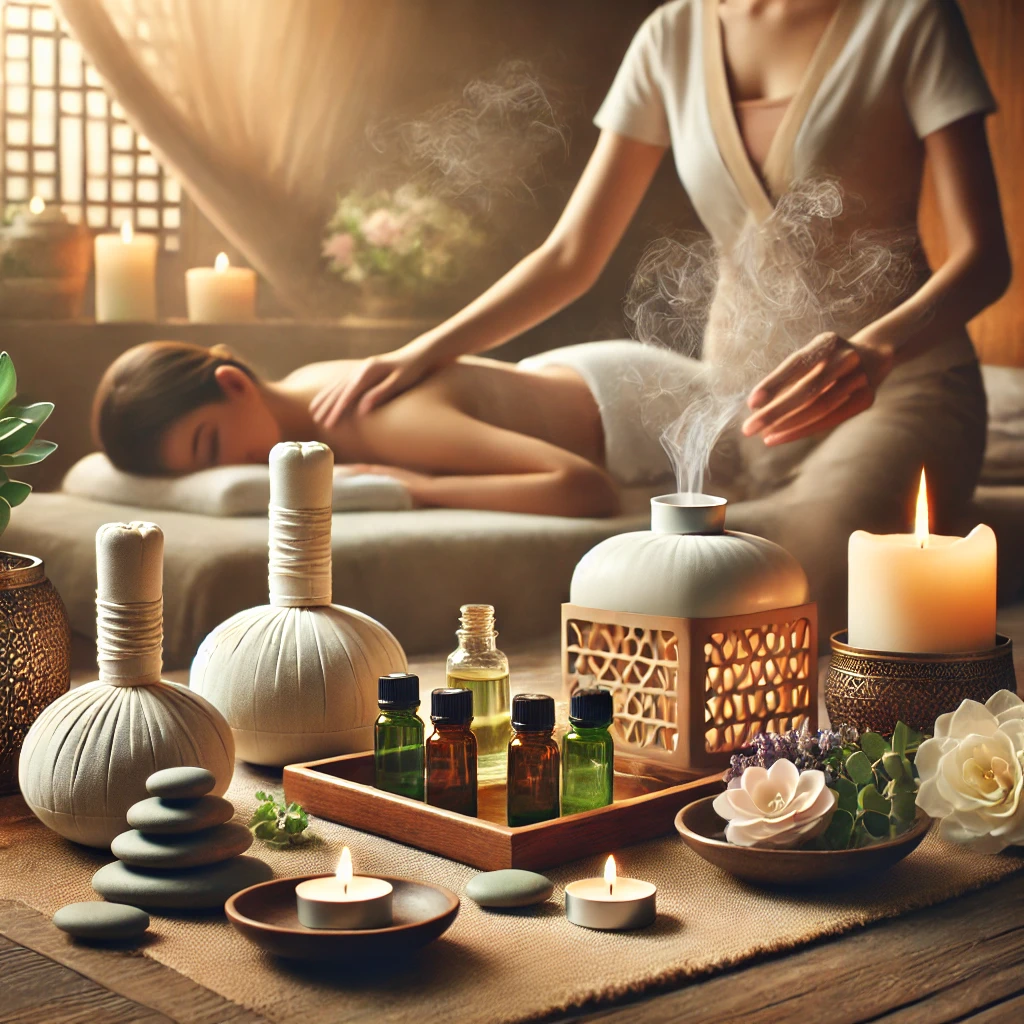
Aromatherapy has been an integral part of holistic wellness practices for centuries. In Thai massage, the use of essential oils takes relaxation and healing to the next level by combining the therapeutic benefits of touch with the soothing power of scent. This article explores how aromatherapy enhances the experience of Thai massage, helping to relieve stress, uplift the mood, and promote overall well-being.
An alternative option to enhance your Thai massage experience is Thai Massage with herbal ball. This traditional therapy uses a heated herbal ball filled with therapeutic herbs to provide additional muscle relief and relaxation. Combining the benefits of warmth, pressure, and natural herbs, it offers an even deeper sense of healing and well-being.
What is Aromatherapy?
Aromatherapy is the practice of using natural essential oils extracted from plants to promote physical and emotional health. These oils are carefully chosen for their unique properties, such as calming lavender, invigorating eucalyptus, or balancing bergamot. When used during Thai massage, these oils are either diffused into the air or applied directly to the skin, enriching the sensory experience and amplifying the benefits of the massage.
Enhancing Relaxation Through Scent
The human sense of smell is closely linked to emotions and memory, making scents a powerful tool for relaxation. During a Thai massage session, the calming aroma of essential oils creates a tranquil atmosphere, helping clients unwind and let go of stress. Oils like chamomile and ylang-ylang are particularly effective in inducing deep relaxation and reducing anxiety.
These scents work in harmony with the gentle stretches and pressure techniques of Thai massage, making it easier for clients to achieve a state of complete relaxation and mindfulness.
Therapeutic Benefits for the Body
In addition to their soothing properties, essential oils used in aromatherapy can have profound physical benefits. Oils like peppermint and rosemary are known for their anti-inflammatory properties, which can help alleviate muscle tension and improve circulation. When these oils are massaged into the skin, they penetrate deeply to provide localized relief and support the body’s natural healing processes.
Combining these oils with Thai massage techniques enhances the overall effectiveness of the treatment, leaving clients feeling refreshed and rejuvenated.
Tailored Aromatherapy for Individual Needs
One of the most remarkable aspects of aromatherapy in Thai massage is its adaptability. Essential oils can be customized to meet the specific needs of each client. For instance:
- Relaxation: Lavender, sandalwood, and chamomile oils.
- Energy Boost: Citrus oils like orange and lemon.
- Muscle Relief: Peppermint, eucalyptus, and ginger oils.
- Stress Reduction: Ylang-ylang and clary sage oils.
This level of customization ensures that every session is uniquely suited to the client’s preferences and health goals.
Creating a Holistic Experience
Thai massage with aromatherapy is more than just a physical treatment; it’s a holistic experience that nurtures both the body and the mind. The synergy of therapeutic touch and aromatic oils promotes a sense of balance and well-being, making it an ideal choice for those seeking relaxation and rejuvenation in their busy lives.
Conclusion
Aromatherapy elevates the traditional Thai massage experience by adding the healing power of essential oils. From soothing stress to relieving muscle pain, the benefits are truly transformative. Whether you’re looking for relaxation, energy, or relief from aches, the combination of Thai massage and aromatherapy offers a personalized approach to health and wellness. Experience it for yourself and discover the ultimate path to relaxation and harmony.